
Today, Dubai is a dazzling metropolis of glass towers and futuristic wonders—a city that seems to leap straight out of tomorrow. But long before the Burj Khalifa and Palm Islands, Dubai was just a quiet fishing and pearl diving village. The contrast between its modern skyline and its humble beginnings is what makes its story so fascinating.
To truly appreciate how far Dubai has come, you need to step back in time. And there’s no better place to do that than at the Dubai Museum and Al Fahidi Fort. These aren’t just relics of the past—they’re living pieces of history, offering a real connection to the emirate’s roots.
Visiting here isn’t just about looking at old artifacts. It’s an immersive journey where you’ll walk through time, discovering the people, traditions, and struggles that shaped this global city. Get ready for an experience that’s as educational as it is unforgettable.
Al Fahidi Fort: Dubai’s Oldest Standing Landmark
A Fort with a Story
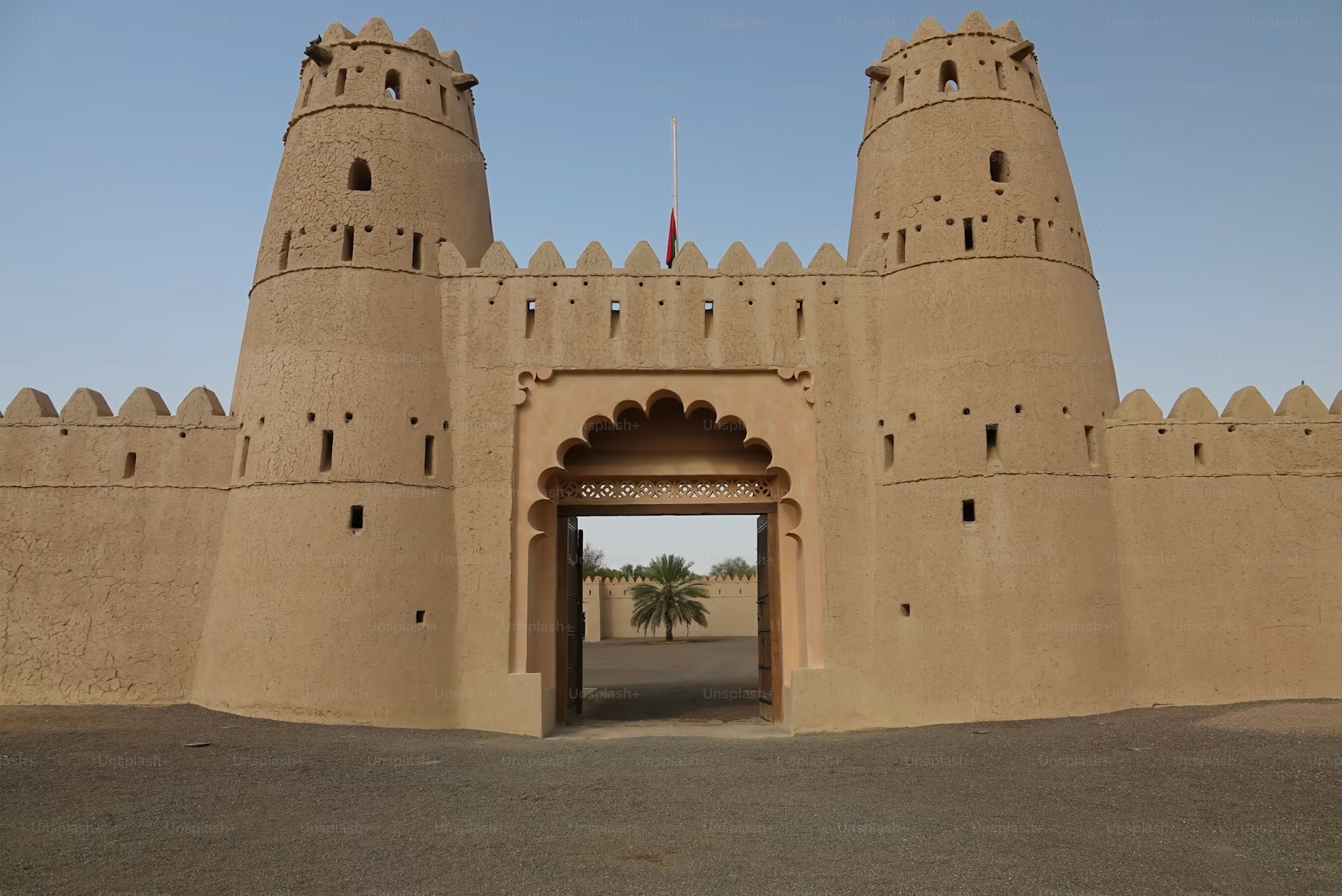
Built in 1787, Al Fahidi Fort is the oldest surviving structure in Dubai. Back then, its job was simple but vital: protect the town. Standing guard near the Dubai Creek—the lifeline of the city—it defended against invaders from land and sea.
But the fort wasn’t just a military stronghold. Over the years, it served as:
✔ The ruler’s residence
✔ A weapons storage (arsenal)
✔ A prison
✔ A meeting place for the ruler’s council
This one building played multiple roles in Dubai’s early days, making it a cornerstone of the emirate’s history.
How It Was Built—And Restored
The fort’s design reflects the resourcefulness of old Dubai. Made from coral stone, mud, and gypsum mortar, its walls were sturdy enough to withstand harsh desert conditions.
Over time, careful restoration projects have preserved its original charm. Today, you can still see:
✔ A spacious courtyard where gatherings once took place
✔ Two watchtowers keeping watch over the city
✔ Traditional wind towers—early versions of air conditioning, designed to catch and funnel cool breezes
Walking through the fort, you can almost hear the echoes of the past.
Inside the Dubai Museum: A Journey Through Time
From Pearls to Prosperity
Housed within Al Fahidi Fort, the Dubai Museum takes you on a step-by-step journey through the city’s evolution. You’ll explore:
-
Early Bedouin life – How people survived in the desert
-
The pearl diving era – When Dubai’s economy relied on the sea
-
The rise of trade – How merchants turned Dubai into a bustling port
-
The discovery of oil – The game-changer that transformed everything
It’s a story of humble beginnings to global fame—one that makes Dubai’s modern success even more impressive.
Exhibits That Bring History to Life
The museum doesn’t just show you history—it makes you feel it. Some highlights include:
✔ Lifelike dioramas of traditional markets (souks) and homes
✔ Recreated scenes of pearl divers, fishermen, and traders
✔ Ancient weapons, tools, and artifacts—some thousands of years old
✔ Archaeological finds that reveal Dubai’s deep roots
You won’t just be looking at displays—you’ll be stepping into them.
A Glimpse into Traditional Emirati Life
Ever wondered how people lived here before skyscrapers and luxury malls? The museum paints a vivid picture:
-
Traditional clothing – From flowing kanduras to intricate abayas
-
Handmade crafts – Pottery, weaving, and other skills passed down for generations
-
Music and social customs – The rhythms and rituals that shaped daily life
It’s a fascinating contrast to the ultra-modern Dubai we know today.
Beyond the Museum: Exploring Old Dubai
Al Fahidi Historical Neighbourhood (Bastakiya)
Right outside the fort lies the Al Fahidi Quarter, also known as Bastakiya. With its narrow lanes, wind towers, and sand-colored buildings, it feels like stepping into a time capsule.
This area was once home to wealthy Persian merchants, and their legacy lives on in the beautifully restored architecture. Strolling through here, you’ll find:
✔ Art galleries showcasing local talent
✔ Quaint cafés in historic settings
✔ The iconic wind towers—an early form of natural cooling
It’s the perfect place to slow down and soak in Dubai’s authentic charm.
More Cultural Gems Nearby
Your historical adventure doesn’t end at the museum. Nearby, you can:
✔ Take an abra ride – Hop on a traditional wooden boat and cross Dubai Creek, just like traders did centuries ago.
✔ Visit the Sheikh Mohammed Centre for Cultural Understanding – Enjoy Emirati meals, storytelling, and Q&A sessions with locals.
✔ Explore the Textile Souk – A vibrant market filled with spices, fabrics, and handicrafts.
Every corner of this area tells a story.
Planning Your Visit: Tips for the Best Experience
When to Go & How to Get There
-
Best time to visit: October to April (cooler weather)
-
Best time of day: Early morning or late afternoon (to avoid crowds)
-
How to get there:
-
Metro: Al Fahidi Station (Green Line) is a short walk away.
-
Bus/Taxi: Plenty of options stop nearby.
-
Parking: Available if you’re driving.
-
Making the Most of Your Trip
✔ Guided tours – Worth it for deeper insights.
✔ Spend at least 1-2 hours – Rushing means missing hidden details.
✔ Try local food – Sample Emirati dishes like Machboos (spiced rice with meat) or Luqaimat (sweet dumplings).
Extend the Experience
Why stop at history? Dive deeper into Emirati culture:
-
Attend a traditional dance or music performance
-
Try a henna painting session
-
Visit a camel farm or desert heritage village
Final Thoughts: Why This Visit Matters
Dubai’s rapid rise can make it easy to forget its roots. But the Dubai Museum and Al Fahidi Fort are powerful reminders of where this city came from—a small but resilient community that grew into a global icon.
By exploring these sites, you don’t just see history—you connect with it. And when you step back into modern Dubai, you’ll appreciate its achievements even more.
Ready to travel back in time? Plan your visit today—and discover the soul behind the skyscrapers. 🚀